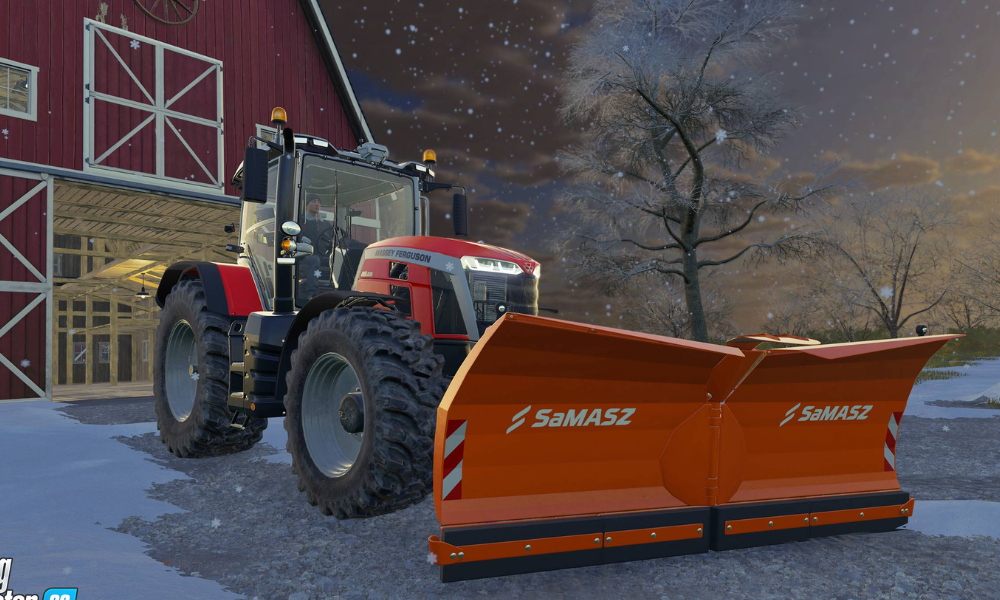
In this club, there's no shooting or lurking zombies around corners. This club is zen. You can almost hear the crops growing in the field you've sown. Tractors chug slowly past, and cows moo in the pasture.
The School of Gaming's very own teaching farm comes to life as future rural torchbearers take the reins of a tractor to learn the ancient profession of farming. In the process, they learn about geography, biology, economics, chemistry, decision-making, and project work.
Unlike the popular game Hay Day by Supercell, the School of Gaming's farm simulation lesson aims to accurately model real-world farm behavior. Economic conditions affect grain prices, tractors can break down, purchases need to be planned, all while maintaining a delicate balance. The future of your farm and your next moves can be pondered carefully while steering the combine harvester, listening to your favorite tunes.
Young virtual farmers are encouraged to explore sustainable agriculture and try out new crops and cultivation methods.
Guiding young club members on their journey to becoming farmers and serving as the head farmer is the School of Gaming's own game educator. In this world, up to 16 players can play simultaneously.
Let's have competitions in Farming Simulator just like real esports! Later on, there's a chance to join these competitions as skills improve.
Farming Simulator offers engaging activities for different ages and types of players. With a PEGI age rating of 3, the game is completely free of violence, making it a great choice for younger players, especially when played together with a parent.